
Why Getting Rid of Your Fridge Freezer Properly Matters
Get rid of fridge freezer the wrong way and you risk fines, injuries, and real environmental damage. The right way is easier than most people think—and sometimes even puts cash back in your pocket.
Quick, legal options:
- Retailer haul-away when you buy a new unit
- Utility rebate (often up to $50)
- Municipal bulk pickup by appointment
- Certified recycling-center drop-off
- Donation or resale if the unit still works
- Professional junk removal for same-day speed
Every refrigerator contains refrigerant, oils, and heavy materials that must be removed by certified techs. More than 2 million units are binned each year in the UK alone, but nearly every part—steel, plastic, even glass—can be recycled when handled correctly.
I’m Lux Chhen. Running freight trucks and Bins & Beyond Dumpster Rental, I’ve helped hundreds of Central Pennsylvania homeowners get rid of fridge freezer units safely. The next sections show the simplest routes for your timeline and budget.

Why Proper Fridge Freezer Disposal Matters
Each fridge holds chemicals far more damaging than CO₂ when released. Older models may also harbor mercury switches and PCBs. If these leak into soil or waterways, cleanup can cost thousands—and that’s before legal penalties.
Environmental Hazards
Even a small release of CFCs or HFCs undoes years of careful climate policy. Proper recycling captures these gases and recovers more than 120 lb of steel for new products.
The Legal Bottom Line
Federal EPA Section 608 and local bylaws require certified techs to remove refrigerants and oils. Skip that step and you could face four-figure fines or liability for contamination. Bottom line: the law makes responsible disposal mandatory, not optional.
How to Get Rid of Fridge Freezer Responsibly
Different situations call for different tactics, so pick the one that matches your schedule, budget, and the condition of your unit.
Fast & Easy Choices
Retailer haul-away
Most big-box stores remove your old appliance during delivery of the new one. Schedule it at checkout and ensure easy access.
Utility bounty programs
Electric companies often pay $30–$50 to collect working units between 10–30 cu ft. Pickup is free and fully certified.
Municipal bulk pickup
Call your local waste office; many Central PA towns collect appliances on set days for a small fee—or free.
Donation or resale
If it still cools, list it online or donate to a local charity for a tax receipt.
Certified recycling centers
Drop off non-working units; techs handle refrigerant extraction on site.
Professional junk removal
Great during remodels or estate cleanouts. Bins & Beyond arranges certified disposal alongside other debris.
Scrap Yards & Dumpsters
Scrap yards only accept fridges after you supply paperwork proving refrigerant removal. Regular dumpsters are prohibited; Bins & Beyond offers 10-yd ($350, 1 ton) or 14-yd ($500, 3 tons) rentals but coordinates separate appliance pickup so you stay compliant.
What NOT to Do
- Never leave a fridge at the curb with doors intact.
- Never vent refrigerant yourself; it’s illegal and dangerous.
- Avoid fly-tipping—penalties are severe.
- Keep appliances out of standard dumpsters; extra fees apply if finded.
Prepping Your Fridge Freezer for Pick-Up or Drop-Off
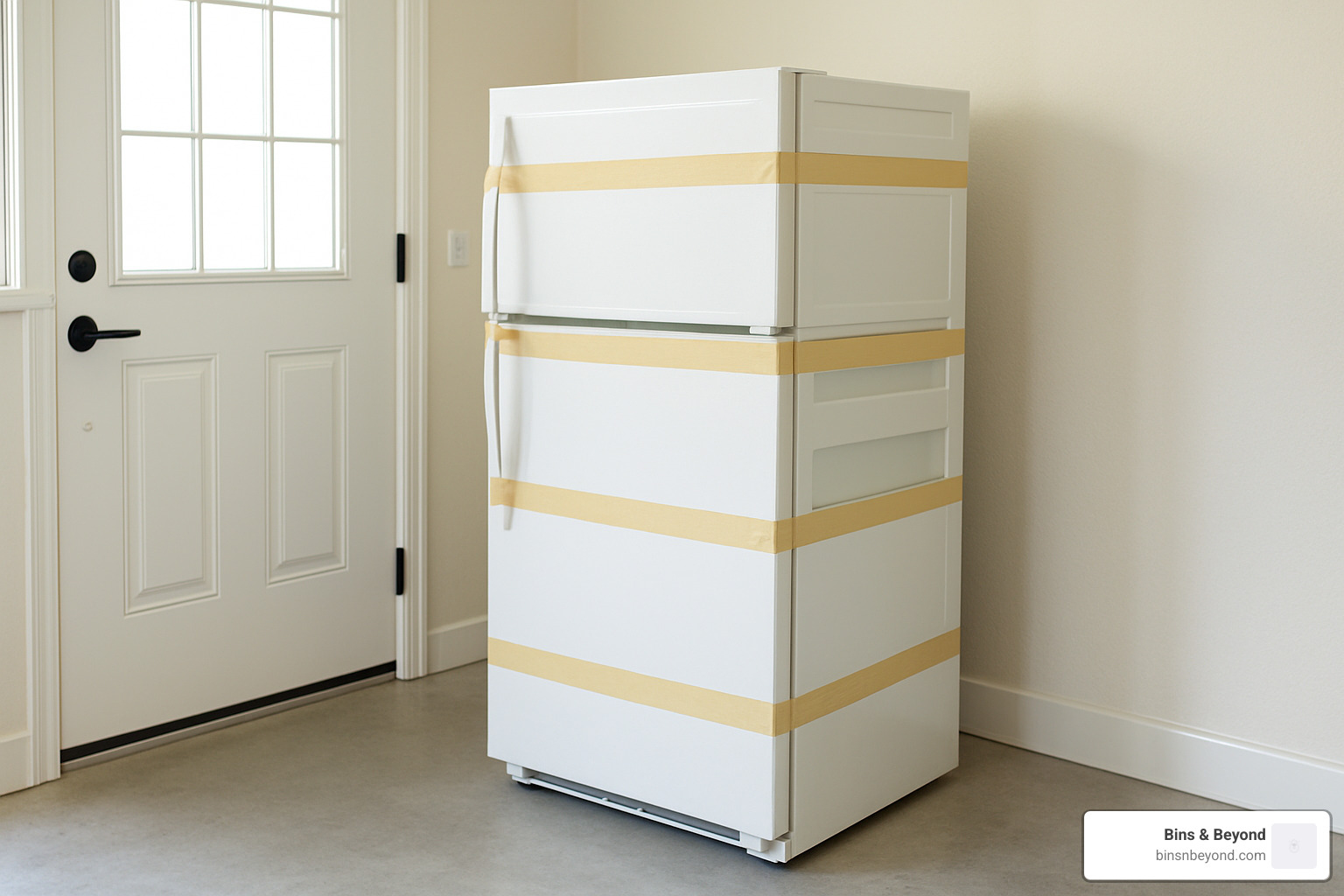
Getting your fridge ready for pickup isn’t just about making the disposal crew’s job easier – it’s about safety, preventing damage to your home, and ensuring the unit can be properly recycled. I’ve seen too many pickup attempts go sideways because homeowners didn’t realize their appliance needed 24 hours of preparation time.
Start by unplugging your unit a full day before pickup. This gives the freezer section enough time to completely defrost, which prevents water from dripping all over your floors during transport. Trust me, cleanup is much easier when you place towels around the base from the start rather than finding a puddle after the crew arrives.
Empty everything out completely – and I mean everything. Remove all food, condiments, and those mystery containers hiding in the back. Take out all the shelves, drawers, and removable parts. These loose pieces can become projectiles during transport, potentially injuring someone or damaging the appliance.
Once empty, clean the interior thoroughly with mild soap and water, then dry it completely. This step matters more than you might think – a clean, odor-free unit is much more likely to be accepted by donation programs if your appliance still works. Even for recycling, it shows respect for the workers who’ll be handling your old fridge.
Securing moving parts is where many people cut corners, and it shows. Use strong packing tape to create an X pattern across glass shelves – this prevents them from shattering if the unit gets jostled. Tape the doors shut or remove them entirely depending on your disposal method’s requirements. Coil up the power cord and tape it to the back so nobody trips over it.
Don’t forget to clear a path from your kitchen to wherever the pickup crew can access it. Measure doorways, especially if you’re dealing with a large American-style unit. Nothing’s more frustrating than finding your fridge won’t fit through the basement door after you’ve already moved it halfway there.
Safety First & Child Entrapment Prevention
Here’s something that keeps me up at night – child safety around discarded appliances. Federal law requires door removal or latch disabling on disposed refrigerators, and for good reason. Children see these units as potential hiding spots or playhouses, not understanding the deadly risk of entrapment.
Remove the doors completely if you’re dropping off at a recycling center or leaving the unit for extended periods before pickup. If your disposal service prefers doors attached, disable the latching mechanism so doors can’t close and lock. Some newer units have magnetic seals that can be pushed open from inside, but older models with mechanical latches are genuine death traps.
Always transport refrigerators upright – tipping them can damage internal components and potentially cause refrigerant leaks. This means you’ll need proper equipment like a dolly and at least two people for safe lifting. These units typically weigh 200-300 pounds, and the weight distribution makes them incredibly awkward to handle alone.
Wear work gloves when handling your old appliance. The coils, edges, and external components can have sharp surfaces, and years of accumulated dust and grime can irritate your skin. It’s a small precaution that prevents unnecessary cuts and scrapes during an already challenging job.
When you get rid of fridge freezer units through our services at Bins & Beyond, we coordinate with certified disposal partners to ensure all safety requirements are met. We’ve seen enough close calls over the years to know that proper preparation isn’t just recommended – it’s essential for everyone’s safety.
After Collection: Where Does Your Old Appliance Go?

- De-gassing – Certified techs recover every ounce of refrigerant and oil for reuse or safe destruction.
- Hazard removal – Mercury switches, PCBs, and capacitors are extracted for specialized treatment.
- Material recovery – Steel heads to smelters, plastics to re-grind, and glass to local recyclers.
- Foam processing – Advanced plants capture blowing agents before shredding insulation.
The climate win is huge: capturing the refrigerant from one fridge prevents greenhouse emissions equal to driving a car thousands of miles.
Cost Snapshot
- Retailer haul-away: often $0 with purchase
- Municipal pickup: free–$70 depending on town
- Private junk removal: $40–$115, size & access dependent
- Utility bounty: pays you $30–$50
Hidden-fee alert: put a fridge in a regular dumpster and surcharge bills can top $100.
Creative Ways to Repurpose Instead of Toss

Sometimes the best way to get rid of fridge freezer units is to transform them into something entirely new. If your appliance has stopped cooling but the cabinet is still in decent shape, repurposing can give it a second life while keeping it out of the waste stream.
Garden planters are probably the most popular change we’ve seen. After having a certified technician properly remove all refrigerants (this step is absolutely essential), you can drill drainage holes in the bottom and create an impressive raised bed for vegetables or flowers. The insulated walls actually help protect plant roots from temperature extremes, and the size gives you plenty of growing space.
Garage storage is another practical option that makes great use of all those built-in shelves and compartments. After the refrigeration components are safely removed, you’ve got a weatherproof cabinet that’s perfect for organizing tools, seasonal decorations, or automotive supplies. The door seals help keep dust and moisture out of your stored items.
We’ve also seen creative homeowners turn their old appliances into unique entertainment centers or bookshelves. With some interior modifications and maybe a fresh paint job, a refrigerator can become a conversation piece that guests will definitely remember. Home brewing enthusiasts sometimes convert them into kegerators for their homemade beer, though this requires more advanced modifications.
For outdoor entertaining, a properly modified refrigerator can serve as a large cooler for parties and gatherings. Remove the electrical components, add some insulation if needed, and you’ve got a weatherproof ice chest that’s much larger than anything you could buy.
Here’s the important part that can’t be skipped: every single repurposing project must start with proper refrigerant removal by a certified professional. The environmental and legal requirements don’t disappear just because you’re not throwing the appliance away. You still need to handle those hazardous materials safely and legally before you can start your DIY project.
If you’re not the DIY type but still want to keep your appliance out of the waste stream, consider offering it on local community boards or social media groups. Someone else might have the skills and interest to tackle a repurposing project, giving your old fridge a new purpose while saving them money on materials.
Frequently Asked Questions About Fridge Freezer Disposal
Do scrap collectors take units that still have refrigerant?
No. Legitimate yards require proof the gas was removed by a certified technician. Anyone who says otherwise risks heavy fines.
Will my council pick up a large American-style fridge?
Yes in most Central PA towns, but you must schedule in advance and may pay a higher fee because of the extra crew and gear needed.
Can I earn money if the fridge still works?
Yes. Combine a utility bounty with a private sale or donation tax write-off. Clean it well, list honest photos, and target peak moving seasons for best returns.
Conclusion
When you need to get rid of fridge freezer units, you’re not just clearing space – you’re making an important environmental choice that affects your community and our planet. Throughout this guide, we’ve walked through the multiple pathways available, from utility rebate programs that actually pay you to retailer haul-away services that handle everything at no cost.
The bottom line is simple: proper disposal isn’t optional. With more than 2,000,000 refrigerators disposed of annually, each containing hazardous refrigerants, mercury switches, and other dangerous materials, the collective impact of our individual choices is enormous. But here’s the encouraging part – you now have all the tools and knowledge to make the right choice for your situation.
Remember the key principles we’ve covered: never attempt DIY refrigerant removal, always work with certified professionals or established programs, and understand that environmental regulations exist to protect all of us. Whether you choose a utility rebate program, municipal pickup, or professional junk removal service, each option we’ve discussed ensures your old appliance gets the specialized handling it requires.
At Bins & Beyond, we’ve seen how proper planning makes appliance disposal straightforward and stress-free. While refrigerators can’t go into standard dumpsters due to their hazardous components, we coordinate with certified recycling partners to handle appliances as part of comprehensive cleanout projects. This approach ensures compliance with all regulations while giving you the convenience of single-point service for your entire project.
Environmental stewardship really does start with individual actions. When you choose responsible disposal methods, you’re directly contributing to ozone layer protection, preventing greenhouse gas emissions, and supporting resource recovery that benefits everyone in our Central Pennsylvania communities.
Ready to take action? Whether you need guidance on the best disposal option for your specific situation or want to coordinate appliance disposal with other cleanout needs, we’re here to make responsible choices simple and convenient. Your old refrigerator doesn’t have to be a headache – with the right approach, disposal becomes just another step in creating the home environment you want.