
The Urgent Need for Green Waste Management
Eco-friendly waste solutions are sustainable methods of managing, reducing, and disposing of waste that minimize environmental impact and conserve natural resources. If you’re looking for ways to manage waste responsibly, here are the core approaches:
- Reduce: Minimize consumption and packaging
- Reuse: Extend product lifecycles through repair and repurposing
- Recycle: Process materials for new uses
- Compost: Convert organic waste into soil amendment
- Zero Waste: Design systems that eliminate waste entirely
Globally, we produce a staggering 2.24 billion metric tons of solid waste annually, with projections showing a 73% increase by 2050 without urgent intervention. This waste crisis contributes significantly to climate change, as decomposing materials in landfills release methane—a greenhouse gas 84 times more potent than CO₂ in the short term.
The environmental impact extends beyond emissions. In developing countries, over 90% of waste is disposed of in unregulated dumps or openly burned, creating serious health hazards for nearby communities. Meanwhile, municipalities in developed nations can spend up to 50% of their budgets on waste management.
Fortunately, solutions exist. Composting alone can divert up to 25% of household waste from landfills. Modern waste-to-energy technologies can reduce waste volume by 96% while generating useful energy. Countries like Sweden demonstrate what’s possible—they incinerate about 50% of their waste for energy production, with only 1% of household waste reaching landfills.
The shift toward eco-friendly waste management isn’t just environmentally sound—it’s economically beneficial. From tax incentives for businesses to lower municipal costs through reduced disposal volumes, sustainable waste practices create value while protecting our planet.
I’m Lux Chhen, entrepreneur and owner of Bins & Beyond Dumpster Rental, with extensive experience implementing eco-friendly waste solutions for both residential and commercial clients. My background in logistics and waste management has given me unique insights into creating efficient, environmentally responsible disposal systems.
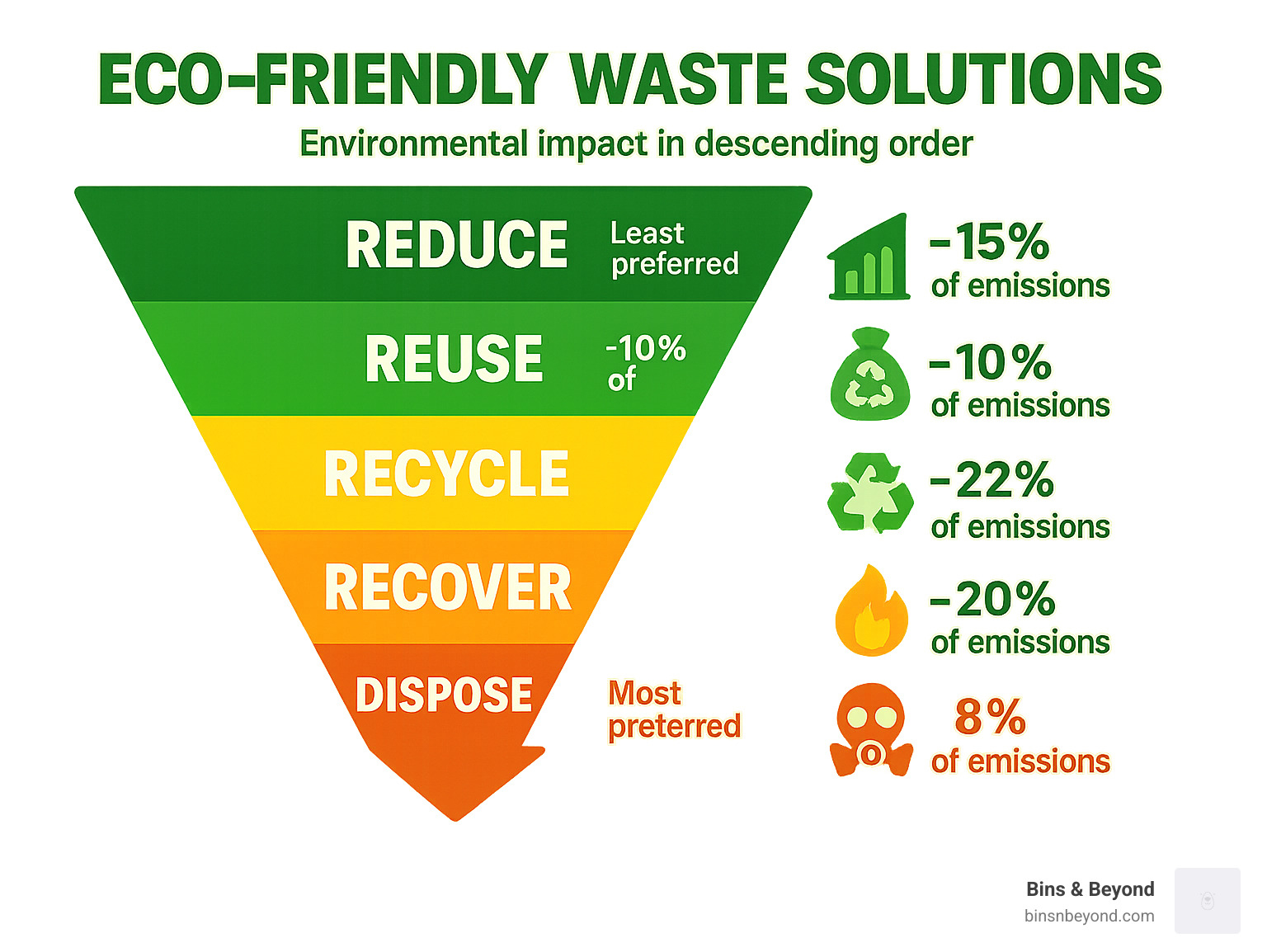
Why Eco-Friendly Waste Solutions Matter
The waste we generate has far-reaching consequences beyond simply taking up space in landfills. Understanding these impacts helps clarify why adopting eco-friendly waste solutions isn’t just a trendy choice—it’s an essential shift for our collective future.
Waste Generation & Climate Change
When organic waste decomposes in landfills without oxygen, it creates methane—a greenhouse gas that traps heat in our atmosphere 84 times more effectively than carbon dioxide in the short term. This powerful greenhouse effect makes our landfills major contributors to climate change.
“The EPA estimates that 42% of all US greenhouse gas emissions come from manufacturing, transporting, and disposing of goods and food,” explains environmental scientist Dr. Katherine Hayhoe. “This means that waste reduction is actually climate action.”
The environmental impact goes beyond just methane. Landfills create leachate—that nasty liquid that drains from waste sites—which can contaminate our groundwater. Landfill fires, which happen more often than you might think, release toxins directly into the air we breathe. Meanwhile, we’re destroying wildlife habitats to make room for ever-expanding waste facilities, and accelerating resource extraction to replace all those materials we’re throwing away.
With global waste generation reaching a staggering 2.24 billion tons annually according to World Bank data, the scale of this problem is hard to overstate.
Social & Economic Costs of Traditional Disposal
The burden of waste doesn’t fall equally on all communities. Low-income areas and communities of color are disproportionately likely to be located near waste disposal facilities, creating serious environmental justice concerns.
In developing countries, the situation is even more troubling. More than 90% of waste is disposed of in unregulated dumps or openly burned, creating immediate health risks for nearby residents. Children and waste pickers who work in these environments face particularly severe health consequences, from respiratory problems to chronic diseases.
From a budget perspective, waste management is incredibly expensive:
- Cities can spend up to 50% of their municipal budgets on solid waste management
- These costs continue to rise as waste volumes grow
- Valuable resources are lost when recyclable materials end up buried forever
“It’s time to think beyond the landfill and put waste to work for your community,” notes sustainability expert Maria Chen. “The economic and social costs of our throwaway culture are simply too high to ignore.”
At Bins & Beyond, we see how proper waste management can make a difference. Whether it’s helping homeowners properly sort their renovation debris or assisting businesses with responsible disposal practices, we believe that small changes add up to significant impact. By choosing eco-friendly waste solutions, you’re not just cleaning up your space—you’re contributing to a healthier planet and more equitable communities.
Core Principles of Sustainable Waste Management
Effective eco-friendly waste solutions follow a hierarchy of approaches, with prevention and reduction at the top. This framework, commonly known as the waste hierarchy or the 3Rs (sometimes expanded to 5Rs or more), serves as a practical roadmap for both individuals and organizations wanting to minimize their environmental footprint.
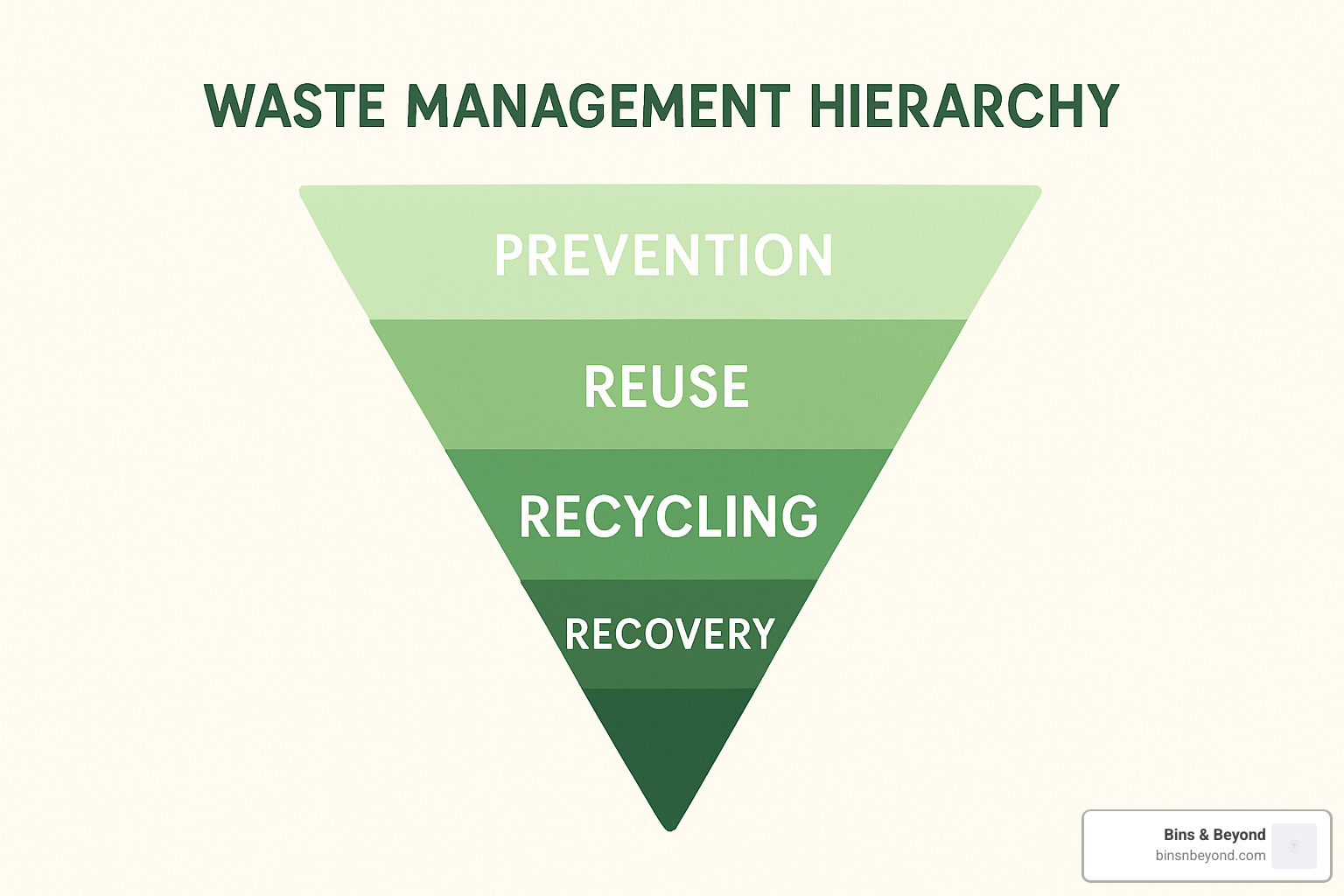
Reduce & Rethink First
The most powerful waste solution isn’t about managing waste—it’s about preventing it from being created in the first place. When we reduce at the source, we conserve natural resources, eliminate processing energy, prevent pollution before it starts, and save money on disposal costs.
“If you don’t buy it, they won’t make it,” says zero waste advocate Lauren Singer, highlighting how our purchasing decisions drive production. Try incorporating conscious buying by purchasing only what you need and choosing minimally packaged products. Make the digital switch to electronic bills and receipts to cut paper waste. Opt for products with minimal packaging or buy in bulk when possible. And perhaps most importantly, invest in product longevity by choosing durable items designed to last.
These simple shifts in our daily habits can dramatically reduce what ends up in our trash bins.
Reuse & Repair
There’s something satisfying about giving items a second life instead of tossing them away. Extending the useful life of products keeps them out of landfills and reduces the demand for new manufacturing.
Consider making donations a regular habit—those unused items cluttering your home could be exactly what someone else needs. Explore second-hand markets when shopping, where you’ll often find quality items at a fraction of their original price. Accept refill culture by using refillable containers for cleaning products, personal care items, and food staples. And when something breaks, consider repair options before replacement.
In Curitiba, Brazil, a community initiative encourages residents to bring reusable items to exchange points for redistribution to those in need—simultaneously reducing waste and addressing social needs. This model shows how reuse strategies can benefit both the environment and the community.
Recycle Right & Sort Smart
While recycling is better than landfilling, it still requires energy and resources—making it the third option in our hierarchy. The effectiveness of recycling hinges on proper sorting and understanding what can actually be recycled in your area.
Always clean containers before recycling them, as food residue can contaminate entire batches. Familiarize yourself with local recycling guidelines, as these vary by location. Avoid “wishcycling”—the well-intentioned but problematic practice of putting non-recyclable items in recycling bins hoping they’ll be processed. Be especially careful with plastics: items marked with #3 (PVC), #6 (polystyrene), or #7 (polycarbonate) are either very difficult to recycle or can’t be recycled at all.
At Bins & Beyond, we help our customers properly sort and manage their recyclables, ensuring materials actually get recycled rather than contaminating recycling streams.
Composting: Nature’s Recycler
Composting represents nature’s perfect recycling system—a biological process that transforms organic waste into nutrient-rich soil amendment. This simple yet powerful practice diverts up to 25% of household waste from landfills, creates valuable soil enrichment, reduces methane emissions, and closes the nutrient loop in food systems.
“Composting lessens reliance on chemical fertilizers and benefits agriculture,” notes soil scientist Dr. Jane Thompson. “It’s nature’s perfect recycling system.”
Whether you’re using a simple backyard bin or exploring advanced systems like BiobiN® technology (which can process commercial quantities of organic waste while controlling odors), composting offers a practical solution for organic waste. The process is remarkably adaptable, working equally well for apartment dwellers with countertop bins and large-scale commercial operations.
For comprehensive guidance on getting started with composting, the EPA guide to composting provides excellent resources for both home and commercial applications.
Practical Eco-Friendly Waste Solutions for Homes & Communities
Making your home more eco-friendly doesn’t require a complete lifestyle overhaul. With a few thoughtful changes, you can dramatically reduce your waste footprint while creating a healthier living space. Let’s walk through some practical eco-friendly waste solutions that work room by room.
Room-by-Room Eco-Friendly Waste Solutions
In the Kitchen
Your kitchen is likely waste central in your home. The good news? It’s also where you can make the biggest impact. Start by keeping a small countertop compost bin for vegetable scraps, coffee grounds, and eggshells. This simple habit can divert a surprising amount of waste from landfills.
“Up to 40% of the US food supply goes to waste,” notes food waste expert Dana Gunders. This staggering statistic has a simple solution: thoughtful meal planning. By planning meals and creatively using leftovers, you’ll not only reduce waste but also save money on your grocery bills.
Replace single-use items with durable alternatives that last years instead of minutes. Beeswax wraps can replace plastic wrap, cloth napkins eliminate paper waste, and glass containers make plastic disposables unnecessary. For pantry staples like rice, pasta, and beans, buying in bulk with your own containers cuts packaging waste dramatically.
In the Bathroom
The bathroom offers surprising opportunities for waste reduction that many people overlook. Post-consumer recycled toilet paper makes a significant difference—if every US household replaced just one roll of virgin-fiber toilet paper with recycled, we could save 423,900 trees annually.
Personal care products often come with excessive packaging, but alternatives exist. Bar soap eliminates plastic bottles, bamboo toothbrushes replace plastic ones, and many companies now offer refillable shampoo and conditioner options. For cleaning, simple homemade solutions using vinegar, baking soda, and essential oils work beautifully while reducing chemical waste.
Don’t forget about water conservation—fix leaks promptly and consider low-flow fixtures to reduce water waste alongside physical trash.
In the Laundry Room
Your laundry routine offers several opportunities for greener living. Air-drying clothes whenever possible saves energy and extends the life of your garments, saving an average of $85 per household annually. Replace synthetic dryer sheets with wool dryer balls that last for thousands of loads.
Choose eco-friendly, concentrated detergents that come in minimal packaging, and wash with cold water when possible. This small change saves energy and reduces microplastic shedding from synthetic fabrics—a win for both your utility bill and the environment.
On-the-Go Kit
Create a simple zero-waste kit for when you’re out and about. A small cloth bag containing a reusable water bottle, travel mug, cloth napkin, and bamboo or stainless steel utensils will help you avoid countless disposable items.
“Americans throw out more than 2.1 million tons of paper and plastic plates and cups every year,” explains waste researcher Dr. Robert Collins. “A simple reusable kit can eliminate hundreds of disposable items per person annually.”
Community-Level Initiatives
While individual actions matter, the impact multiplies when communities work together. Consider advocating for curbside organics collection in your neighborhood—municipal composting programs can process a wider variety of materials than home systems.
Organize or participate in repair cafés where people bring broken items to be fixed by skilled volunteers. Host clothing swaps to give new life to unwanted garments. Start a community garden that uses local compost to grow food, closing the loop on organic waste while building community connections.
Sweden provides an inspiring example of community-level success, achieving a remarkable 99% diversion rate from landfills. Only 1% of their household waste ends up buried—the rest is either recycled or converted to energy.
Bulk & Construction Waste Tips
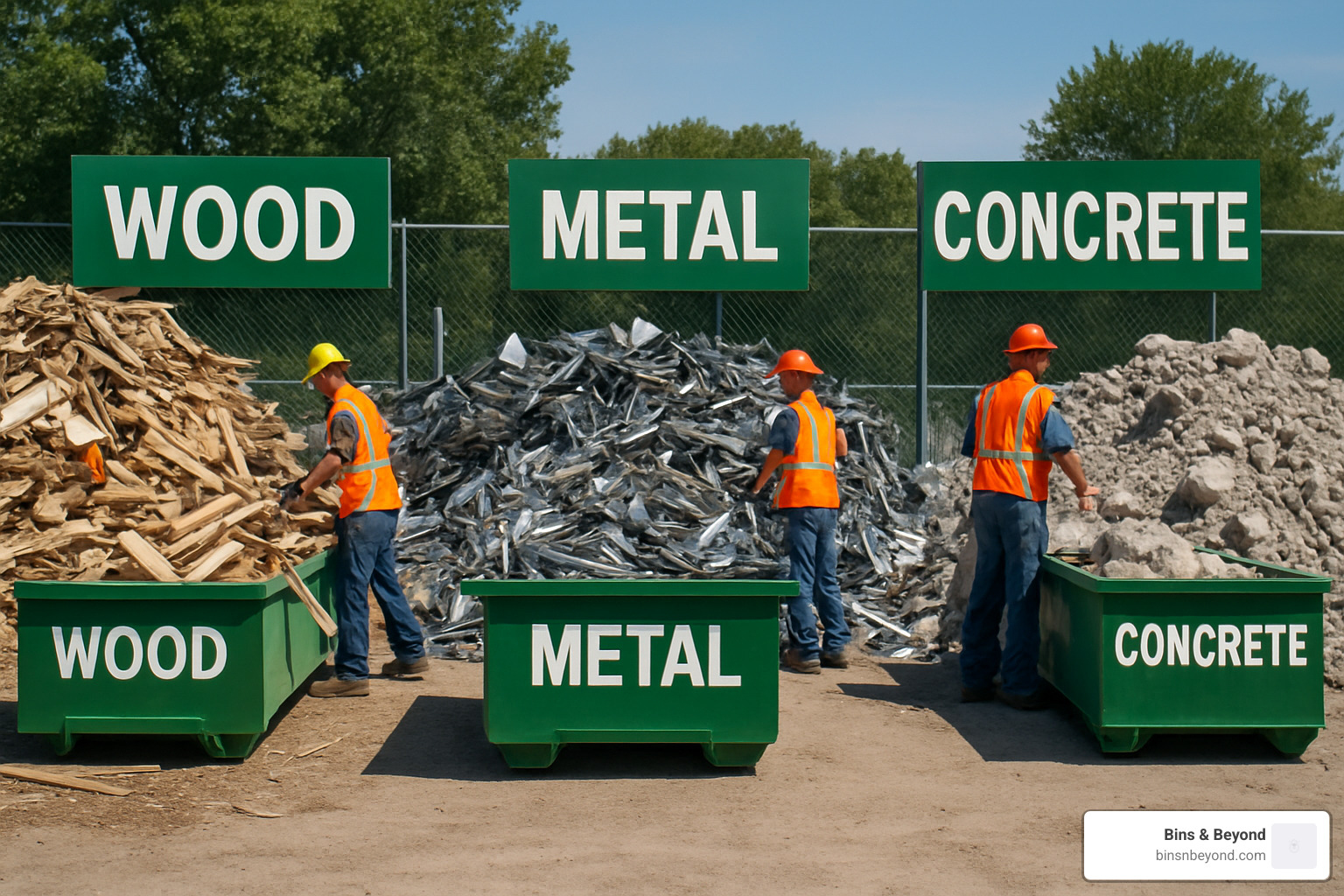
Renovation and construction projects create significant waste, but with thoughtful planning, much of it can be diverted from landfills. Choose deconstruction over demolition whenever possible—carefully dismantling structures allows you to salvage valuable materials for reuse.
Separating materials on-site maximizes recycling potential. Many items like fixtures, cabinets, and unused materials can find new homes through donation to habitat restoration organizations.
At Bins & Beyond, we specialize in construction waste removal services that prioritize proper sorting and recycling. We’ll help you choose the right size dumpster for your project—our 10-yard dumpsters ($350 including 1 ton of waste) are perfect for smaller renovations, while our 14-yard dumpsters ($500 including 3 tons) accommodate larger projects. For big jobs, we offer two 14-yard dumpsters for $800, including 6 tons total.
Working with professionals ensures your waste is handled responsibly, with as much material as possible diverted from landfills through recycling and proper disposal channels.
Technology & Innovation Powering Eco-Friendly Waste Solutions
The waste management industry is undergoing a technological revolution, with innovations making eco-friendly waste solutions more efficient and accessible than ever before.
Smart Collection Systems
IoT (Internet of Things) technology is changing waste collection:
- Sensor-equipped bins: Monitor fill levels and optimize collection routes
- Solar-powered compactors: Use renewable energy to compress waste, reducing collection frequency
- Underground pneumatic waste pipes: Eliminate garbage truck trips in urban areas
- Route optimization: AI algorithms plan the most efficient collection paths, reducing fuel use and emissions
“Smart collection systems can reduce collection trips by up to 40%, significantly cutting carbon emissions and operating costs,” explains waste technology specialist James Peterson.
Advanced Sorting Technologies
Recycling facilities are increasingly using technology to improve sorting accuracy:
- Optical sorters: Use light reflection to identify and separate different materials
- AI-powered robots: Learn to recognize and sort items based on visual characteristics
- Eddy current separators: Remove non-ferrous metals from mixed waste
- Ballistic separators: Sort materials by density and shape
These technologies help address one of recycling’s biggest challenges: contamination. When non-recyclable items enter the recycling stream, they can render entire batches unusable.
Waste-to-Energy: Benefits & Caveats
Modern waste-to-energy (WTE) technologies offer promising alternatives to landfilling:
- Volume reduction: WTE can reduce waste volume by up to 96%
- Energy generation: Produces electricity or heat from otherwise wasted materials
- Metals recovery: Many facilities recover metals after combustion
- Landfill diversion: Significantly reduces the need for landfill space
Sweden’s approach exemplifies successful WTE implementation. The country incinerates about 50% of its waste to produce energy, with strict emissions controls to minimize environmental impact.
However, WTE is not without concerns:
- Air quality: Requires sophisticated emissions control systems
- Resource recovery: May compete with recycling efforts
- Initial cost: Facilities require significant capital investment
“Waste-to-energy should be viewed as complementary to recycling, not a replacement,” cautions environmental engineer Dr. Sarah Johnson. “It’s best suited for materials that cannot be recycled or composted.”
Digital Tools & Apps for Tracking Waste
Technology is also empowering individuals and organizations to monitor and reduce their waste:
- Waste auditing apps: Help track and categorize waste production
- Food waste prevention tools: Monitor expiration dates and suggest recipes for ingredients
- Recycling guides: Provide location-specific information about what can be recycled
- Sharing platforms: Connect people with usable items they no longer need
These digital tools make sustainable waste management more accessible and measurable, allowing users to see the impact of their efforts.
Business & Policy Pathways Toward Zero Waste
Creating truly sustainable waste systems isn’t something any single person or organization can accomplish alone. It requires thoughtful collaboration between businesses, governments, and communities working together. When these groups align their efforts, eco-friendly waste solutions can flourish and create lasting change.
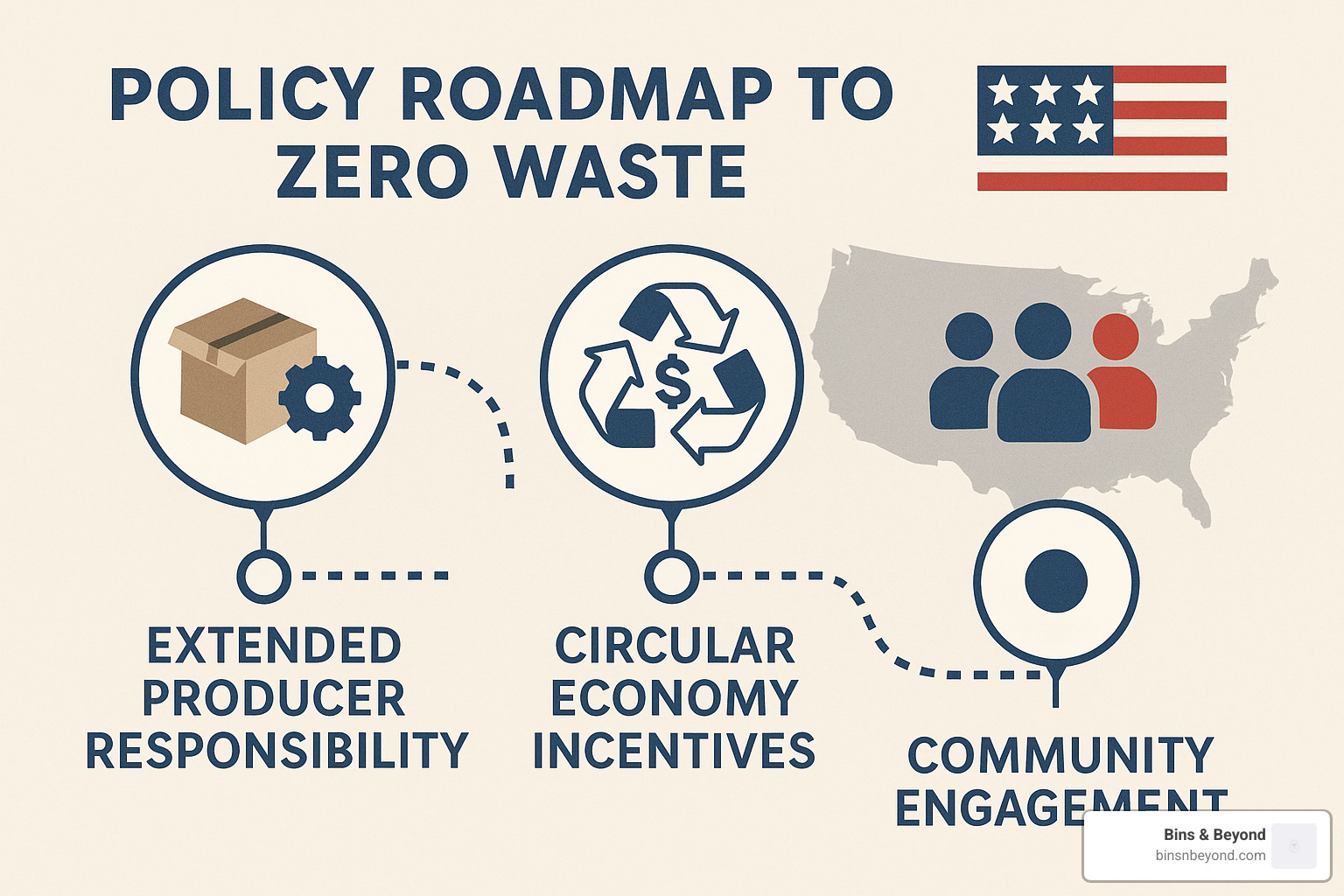
Eco-Friendly Waste Solutions for Businesses
Businesses of all sizes have tremendous power to drive waste reduction. The most successful companies aren’t treating sustainability as an afterthought – they’re weaving it into their fundamental operations.
Waste audits are a smart first step for any business serious about improvement. These systematic assessments reveal exactly what’s being thrown away and identify clear opportunities for reduction. One of our commercial clients finded through an audit that nearly 40% of their waste stream was perfectly recyclable paper – a finding that saved them thousands in disposal fees once addressed.
The shift to paperless operations continues to gain momentum, with digital documentation eliminating not just paper waste but also the energy and resources needed to produce, transport, and store physical documents. Even small businesses can make a big impact – one local accounting firm we work with eliminated over 200 pounds of paper waste monthly by digitizing their workflows.
Perhaps the most exciting business innovation is industrial symbiosis, where one company’s waste becomes another’s raw material. “This approach completely reframes how we think about waste,” explains business sustainability consultant Alex Rivera. “It’s not just good for the planet; it’s financially beneficial. From tax incentives to reduced disposal costs and improved brand reputation, waste reduction creates measurable value.”
Employee engagement is equally crucial. When staff understand and are invested in waste reduction goals, implementation becomes much smoother. Simple training programs and friendly competitions between departments can spark enthusiasm and build lasting habits.
At Bins & Beyond, we help businesses implement practical waste reduction strategies through our tenant cleanout services. We carefully sort materials during cleanouts, ensuring recyclables, donations, and other reusable items are diverted from landfills whenever possible.
Government & Community Collaboration
While businesses can lead the way, supportive policies create the foundation for widespread adoption of eco-friendly waste solutions.
Extended Producer Responsibility (EPR) laws represent one of the most powerful policy approaches. These regulations require manufacturers to take responsibility for their products throughout their entire lifecycle – including disposal or recycling. When companies must manage their products at end-of-life, they suddenly have strong incentives to design more durable, repairable, and recyclable items.
Many communities have found success with pay-as-you-throw programs, which charge residents based on the amount of trash they generate rather than a flat fee. This creates immediate financial motivation to reduce waste. In towns that have implemented these programs, waste volumes typically drop by 20-35% within the first year.
Landfill bans on specific materials – such as yard waste, food scraps, or electronics – effectively push both residents and businesses to find alternative disposal methods. When Massachusetts banned commercial food waste from landfills in 2014, it sparked innovation in composting infrastructure throughout the state.
Public education remains a critical piece of the puzzle. Even the best recycling system will fail if people don’t understand what goes where. Effective education campaigns use clear, consistent messaging and practical demonstrations to help residents sort correctly.
Singapore offers an inspiring example of comprehensive government action. Through thoughtful infrastructure investment, smart regulations, and persistent public education, the city-state has achieved remarkable recycling rates. Their approach demonstrates how coordinated policy can drive significant, lasting change.
For communities across Pennsylvania – including Palmyra, Lebanon, Annville, Hummelstown, Middletown, Hershey, Harrisburg, Grantville, Elizabethtown, Lititz, Jonestown, Fredericksburg, Camp Hill, Mechanicsburg, and Linglestown – Bins & Beyond offers waste management services that align with local regulations while pursuing broader sustainability goals. Our team stays current with changing policies to ensure our customers’ waste is handled responsibly and in compliance with all requirements.
The path to zero waste isn’t a straight line, but with businesses and governments working together, we’re making steady progress toward a cleaner, more sustainable future.
Frequently Asked Questions about Eco-Friendly Waste Solutions
How can I start composting in a small apartment?
Living in a small apartment doesn’t mean you have to miss out on the benefits of composting. Even with limited space, you have several practical options:
A countertop composting system might be your best friend in a small space. These compact bins are specifically designed with odor-controlling features that make them apartment-friendly. Many use charcoal filters or special seals to keep smells contained.
Vermicomposting sounds fancy (and maybe a little intimidating), but it’s just composting with worms! These little helpers break down your food scraps efficiently and, when done properly, create a surprisingly clean, odor-free system that can fit under your kitchen sink.
“I was amazed how easy apartment composting became once I found the right system,” shares urban resident Maria Lopez. “My countertop bin processes all my vegetable scraps with zero odor issues.”
If you’re not ready for worms, try the freezer method – simply store your scraps in a container in the freezer until you can drop them off at a community garden or collection point. Freezing eliminates odors completely while awaiting disposal.
Many cities now offer community composting services with convenient drop-off locations or even collection services. Check with your local municipality or neighborhood gardens to find options near you.
Are Eco-Friendly Waste Solutions expensive to implement?
The perception that going green costs more isn’t always accurate. While some eco-friendly waste solutions do have higher upfront costs, they often save money over time:
Reusable alternatives like cloth napkins, water bottles, and food containers pay for themselves after just a few uses. A quality water bottle might cost $20-30, but it replaces hundreds of disposable bottles over its lifetime.
Composting reduces your trash volume, which can lower your disposal fees if you pay by volume or weight. Plus, you’ll save money on store-bought soil amendments for your plants.
Repairing items instead of replacing them almost always costs less in the long run. A simple fix to extend a product’s life can save hundreds compared to buying new.
For businesses, waste reduction initiatives often show positive returns through reduced disposal costs, tax incentives, lower procurement expenses, and improved brand value. Many of our commercial clients at Bins & Beyond report that their waste reduction programs became profit centers rather than cost centers within the first year.
What materials are truly recyclable?
Recycling can feel confusing because guidelines vary by location, but certain materials are generally accepted in most programs:
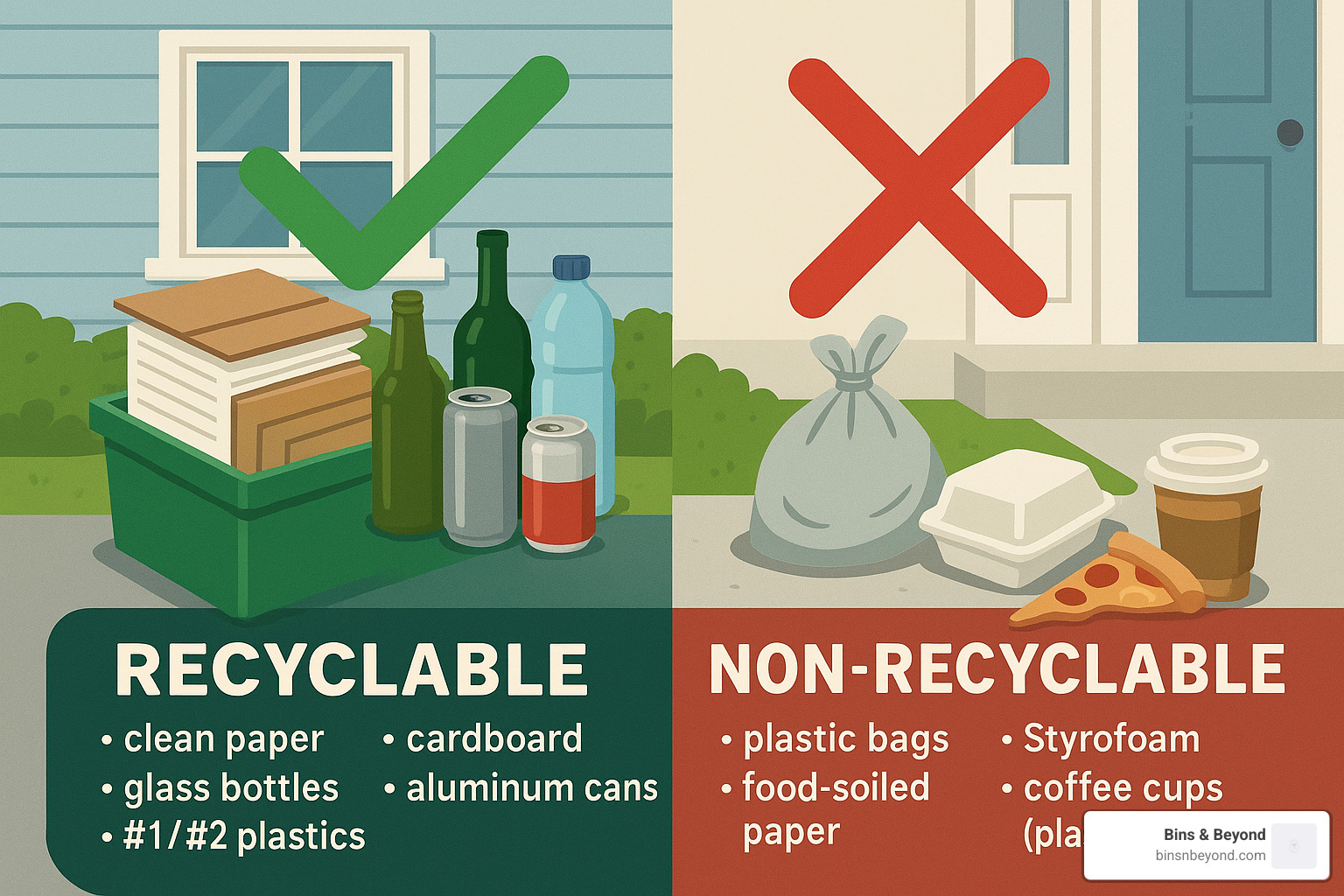
Metal items like aluminum cans, steel cans, and clean aluminum foil are recycling superstars – they can be recycled indefinitely without quality loss. Paper products including office paper, newspapers, magazines, and cardboard are widely accepted (just keep them clean and dry). Glass bottles and jars are highly recyclable – just give them a quick rinse first. Among plastics, numbers #1 (PET) and #2 (HDPE) are most commonly accepted – these include water bottles and milk jugs.
On the flip side, these materials typically don’t belong in your curbside bin: plastic bags and film (return these to grocery store collection points instead), Styrofoam (#6 plastic), greasy or food-soiled paper, and mixed materials like coffee cups with plastic linings.
“The key to effective recycling is knowing your local guidelines,” advises recycling coordinator James Wilson. “When in doubt, check with your local program rather than ‘wishcycling’ items that might contaminate the stream.”
How do I handle hazardous waste responsibly?
Hazardous waste needs special attention – it should never go in your regular trash or recycling bins. Start by identifying hazardous items in your home: paint, batteries, electronics, cleaning chemicals, pesticides, and fluorescent bulbs all qualify.
Store these items safely in their original containers in a cool, dry place away from children and pets. Most municipalities host periodic hazardous waste collection events – mark your calendar when these are announced.
Many retailers offer take-back programs for specific items – hardware stores often accept paint and batteries, while electronics retailers typically take old devices and accessories. These programs ensure proper handling of potentially harmful materials.
At Bins & Beyond, we’re happy to advise on proper disposal options for hazardous materials in your area, though these items cannot be placed in our standard dumpsters due to environmental regulations that protect our soil and water.
How can I reduce waste during home renovations?
Renovation projects can create mountains of waste, but with thoughtful planning, you can minimize your environmental footprint:
Start with accurate measurements to order only what you need – this simple step prevents excess materials that often end up as waste. Consider deconstruction instead of demolition where possible, carefully removing salvageable materials that can find new life elsewhere.
Many usable fixtures, cabinets, and materials can be donated to restoration stores like Habitat for Humanity ReStore, giving them a second life while providing you with a potential tax deduction. When demolition is necessary, proper sorting of waste streams (separating wood, metal, concrete, etc.) maximizes recycling potential.
Choosing the right-sized dumpster rental is crucial for efficient waste management. At Bins & Beyond, our 10-yard dumpsters ($350) are perfect for smaller renovation projects, while 14-yard dumpsters ($500) accommodate larger jobs. For extensive renovations, our package of two 14-yard dumpsters ($800) provides 6 tons of total capacity – all with our commitment to responsible disposal.
Conclusion: Your Path to Sustainable Waste Management
The journey toward eco-friendly waste solutions isn’t a destination—it’s an ongoing commitment that starts with awareness and grows through consistent action. Whether you’re just beginning to explore waste reduction or looking to improve practices you’ve already adopted, every step you take creates meaningful change.
We face a daunting waste crisis—2.24 billion metric tons annually and climbing—but practical solutions are well within our reach. From simple kitchen swaps to neighborhood-wide initiatives, each of us holds the power to make a difference right where we are.
Here at Bins & Beyond, we’re passionate about supporting your sustainability goals throughout central Pennsylvania. Our services in Palmyra, Lebanon, Annville, Hummelstown, Middletown, Hershey, Harrisburg, and neighboring communities are designed with both environmental responsibility and your convenience in mind.
When you need waste management support, we offer thoughtfully sized dumpsters for projects of every scale. Our 10-yard dumpsters at $350 (including 1 ton of waste) are perfect for smaller cleanouts, while our 14-yard options at $500 (including 3 tons) accommodate larger projects. For extensive renovations or cleanouts, our package of two 14-yard dumpsters at $800 gives you 6 tons of total capacity—all with proper sorting and responsible disposal built in.
As you continue your sustainability journey, keep the waste hierarchy close at heart: reduce what you consume first, then reuse what you can, recycle appropriately, recover energy where possible, and dispose only as a last resort. This framework not only minimizes your environmental footprint but often delivers unexpected financial benefits along the way.
The shift toward sustainable waste practices represents more than an environmental necessity—it’s an opportunity to build more resilient, resource-efficient communities. Sweden’s remarkable 99% landfill diversion rate shows us what’s possible when communities and systems align toward a common goal.
Ready to take your next step toward more responsible waste management? The Bins & Beyond team is here to support your eco-friendly waste solutions with personalized service and environmental commitment. Together, we can turn waste challenges into opportunities for positive change.