
Your Construction Waste Solution: Finding the Right Dumpster
When your construction project is underway, the last thing you want is debris piling up and creating hazards. That’s where dumpster rental for construction comes in – it’s not just a convenience, it’s a necessity for project success.
Most contractors and DIY renovators find these key points helpful when planning their waste management:
- Popular sizes: 10-yard (small renovations), 20-yard (most remodels), 30-yard (major construction)
- Rental includes: Delivery, pickup, and disposal allowance
- Typical rental period: 7-10 days standard
- Permits needed: Yes, for street placement ($75-$120 in most cities)
- Best for: Construction debris, demolition waste, roofing materials
Having the right dumpster on-site transforms your workflow. Think about it – instead of workers creating messy debris piles or making constant trips to dispose of waste, everyone can quickly toss materials into a centralized container. This keeps walkways clear, reduces safety hazards, and lets your team focus on actual construction rather than cleanup.
I’ve seen how proper waste management can make or break a project’s timeline. A kitchen renovation that should take a week can stretch into two when there’s nowhere to put the old cabinets, drywall, and flooring. That’s why experienced builders consider dumpster rental for construction as essential as having the right tools on site.
Choosing the right size is where many people get stuck. Go too small, and you’ll face costly swap-outs that delay your project. Go too big, and you’re paying for space you don’t need. For most home remodeling projects, a 20-yard dumpster hits the sweet spot – spacious enough for substantial debris without overwhelming your property. Major renovations often require stepping up to a 30-yard container.
At Bins & Beyond, we offer options like our 10-yard dumpster that’s perfect for smaller jobs or targeted demolition work. Our 14-yard containers strike a nice balance for medium-sized projects. And remember – you can always rent multiple containers if you’re handling different types of waste that should be separated.
Hi there – I’m Lux Chhen, owner of Bins & Beyond Dumpster Rental. My background as a freight truck driver gave me valuable insights into proper loading techniques and weight distribution. I’ve helped countless contractors and homeowners find the perfect dumpster rental for construction solutions, and I’m passionate about making waste management the simplest part of your project.
Dumpster Rental for Construction 101: What It Is & Why You Need One
A construction dumpster isn’t just a giant metal box that sits on your property—it’s the unsung hero of your construction project. These specialized roll-off containers make the difference between a chaotic, hazardous worksite and a clean, efficient operation. With their open-top design, construction dumpsters welcome all those bulky materials that have no other place to go, from broken drywall to splintered lumber.
“When we’re on a construction site, time is literally money,” shares Mike, a contractor who regularly partners with us in Harrisburg. “Having a properly sized dumpster right where we need it means my crew isn’t wasting time hauling debris across the site or making constant trips to the landfill.”
The workflow benefits are impossible to ignore. Research from Recycling Simplified shows that construction sites with dedicated waste management solutions like dumpster rental for construction experience up to 30% greater efficiency. Workers can immediately toss debris rather than creating mountains of waste that eventually become obstacles.
Safety is another critical factor. Without proper waste containment, construction sites quickly become dangerous environments with trip hazards lurking everywhere, fire risks from piled combustibles, potential environmental contamination, and the looming threat of code violations that can shut down your project and drain your wallet.
How a Construction Dumpster Works
The beauty of construction dumpsters lies in their simplicity:
-
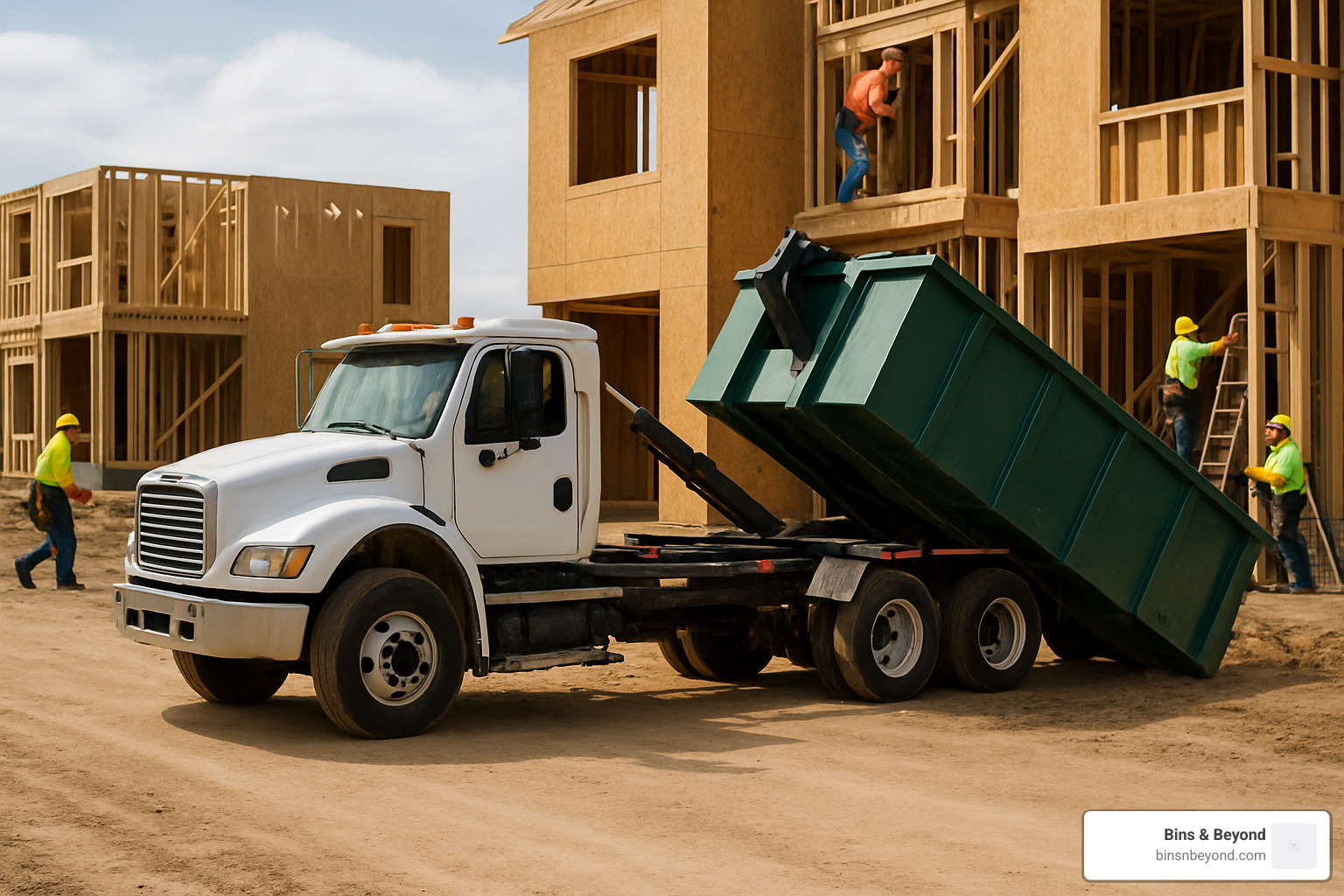
Delivery drop-off: Our truck arrives with your chosen container and places it precisely where you need it—whether that’s in your driveway, alongside your building, or (with proper permits) on the street.
-
Onsite fill: Throughout your rental period, you and your team can fill the dumpster at your own pace. The open-top design accommodates everything from hand-tossed scraps to wheelbarrow loads of heavier debris.
-
Scheduled pickup: When your container is full or your project wraps up, we’ll retrieve it on the scheduled date. Need more time? A quick call arranges an extension.
-
Landfill weigh-in: After pickup, we transport your debris to the appropriate facility where it’s weighed and processed. We prioritize recycling where possible, diverting materials from landfills whenever we can.
Key Construction Projects That Require a Bin
While virtually all construction work benefits from having a dedicated waste container, some projects make dumpster rental for construction absolutely essential:
Roof tear-offs generate massive amounts of waste in a short time. A typical 1,500 square foot roof replacement produces approximately 3-4 tons of shingles and underlayment. Our 14-yard dumpsters handle most residential roofing jobs perfectly, providing capacity for a complete tear-off while staying within road weight limits.
Demolition projects create mountains of debris in the blink of an eye. Whether you’re removing a few interior walls for an open concept or gutting an entire structure, the waste piles up fast. For a standard kitchen demo, a 10-yard dumpster often does the trick, while whole-home renovations typically require 20-30 yard containers.
Concrete removal presents unique challenges due to its extreme weight. Breaking up a driveway, patio, or foundation creates incredibly dense waste that quickly exceeds standard weight allowances. For these projects, we often recommend multiple smaller dumpsters rather than one large container. Our team can guide you to the perfect solution for your concrete disposal needs.
Landscaping overhauls involving tree removal, shrub extraction, and hardscape demolition generate surprising amounts of waste. A 14-yard dumpster typically handles the debris from a standard residential landscaping renovation, giving you plenty of space for soil, plant material, and broken pavers.
New construction generates a steady stream of waste from groundbreaking to final touches. Many contractors opt for ongoing dumpster service with regular swap-outs as containers fill, keeping their sites clean and productive throughout the build. For more detailed information about managing construction waste, visit our construction waste removal page.
Picking the Perfect Dumpster: Sizes, Weight & Material Rules
Choosing the right size dumpster isn’t just about capacity—it’s about matching your specific project needs while keeping costs in check. I’ve seen countless construction sites transform from chaotic debris piles to organized workspaces with the right waste solution in place.
At Bins & Beyond, we’ve designed our container options based on real-world construction needs. Here’s what we offer to make your project flow smoothly:
| Dumpster Size | Dimensions (approx.) | Capacity | Ideal For | Weight Allowance |
|---|---|---|---|---|
| 10 Yard | 12’L x 8’W x 4’H | 4 pickup loads | Small renovations, concrete | 1 ton included |
| 14 Yard | 16’L x 8’W x 4’H | 6 pickup loads | Remodeling, roofing | 3 tons included |
| Double 14 Yard | Two 14-yard bins | 12 pickup loads | Major renovations | 6 tons total |
10–40 Yard Options for Dumpster Rental for Construction
10-Yard Dumpsters are our compact workhorses. With dimensions of approximately 12’L x 8’W x 4’H, they’re perfect for tight spaces and focused projects. Think of them as the equivalent of four pickup truck loads of material—about 60 standard trash bags worth of debris.
These smaller bins come with a 1-ton weight allowance included, making them ideal for bathroom renovations or small kitchen remodels. Many contractors also choose this size specifically for concrete removal projects, since concrete’s extreme weight means you can’t fill larger containers without exceeding road weight limits.
One of our regular customers, a bathroom renovation specialist, tells me he exclusively uses our 10-yarders: “They fit perfectly in my clients’ driveways and hold exactly what I need for a standard bathroom gut job.”
14-Yard Dumpsters are our most requested size for residential projects, striking that sweet spot between capacity and practicality. At roughly 16’L x 8’W x 4’H, these bins handle approximately six pickup loads of construction waste with a generous 3-ton weight allowance included.
This mid-size option shines for complete kitchen remodels, residential roof replacements, and multiple-room renovations. The extra capacity means fewer swap-outs during your project, saving both time and potential additional fees while still fitting in most residential driveways.
Double 14-Yard Option brings serious capacity to major projects. By placing two 14-yard containers, you’ll have the equivalent of twelve pickup truck loads of disposal space with a combined 6-ton weight allowance. This setup is perfect for whole-house renovations, large demolition projects, or new construction.
The beauty of this approach is flexibility—you can place the containers at different access points around larger jobsites, making debris disposal more efficient for your crew. Many commercial remodeling projects benefit from this configuration, especially when working on tight timelines.
Special Loads: Concrete, Brick & Roofing
Some construction materials play by their own rules when it comes to disposal, and understanding these differences can save you significant headaches and unexpected costs.
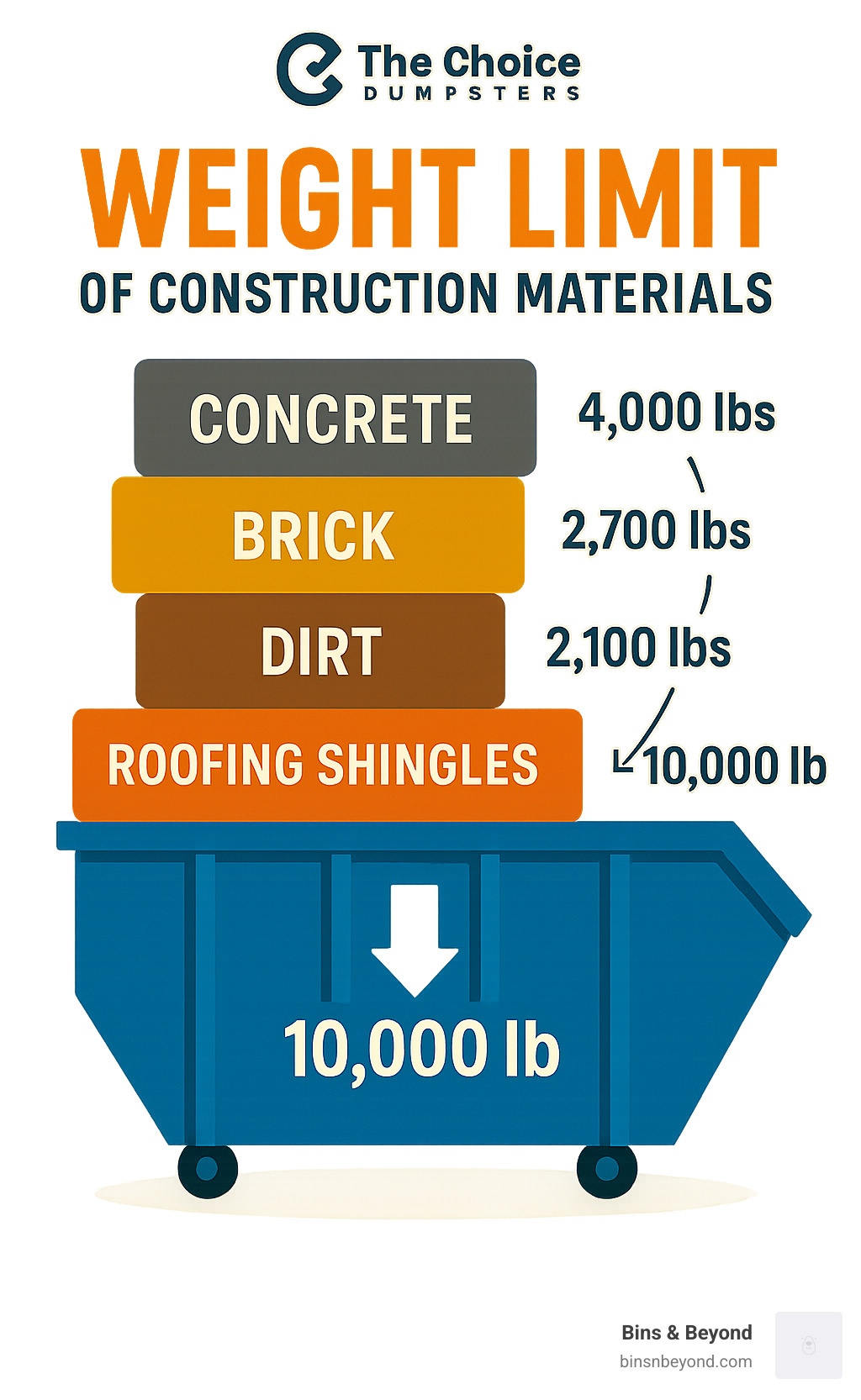
Concrete and brick are deceptively heavy. What looks like a small pile can weigh thousands of pounds—a single cubic yard of concrete tips the scales at around 4,000 pounds! This extreme density means special consideration is necessary.
For concrete disposal, we specifically recommend our 10-yard containers. Even though they’re our smallest option, they’re engineered to handle concentrated weight while remaining transportable on public roads. The 1-ton included weight allowance provides a starting point, with additional tonnage available as needed.
“I learned the hard way that you can’t just throw concrete in any dumpster,” shares Mike, a contractor from Hershey. “A small pile can quickly exceed weight limits. Now I always get Bins & Beyond’s dedicated 10-yard for my concrete jobs, and it’s never been an issue.”
Roofing materials present their own challenges. A typical residential roof tear-off generates about 3-4 tons of waste—primarily heavy asphalt shingles. Our 14-yard dumpsters are specifically sized for most residential roofing projects, providing the perfect balance of capacity and weight handling.
The weight distribution of roofing materials tends to be more even than concrete, allowing for larger container use. Many roofing contractors appreciate that our 14-yard option typically handles a complete tear-off without needing a swap-out, keeping their projects moving efficiently.
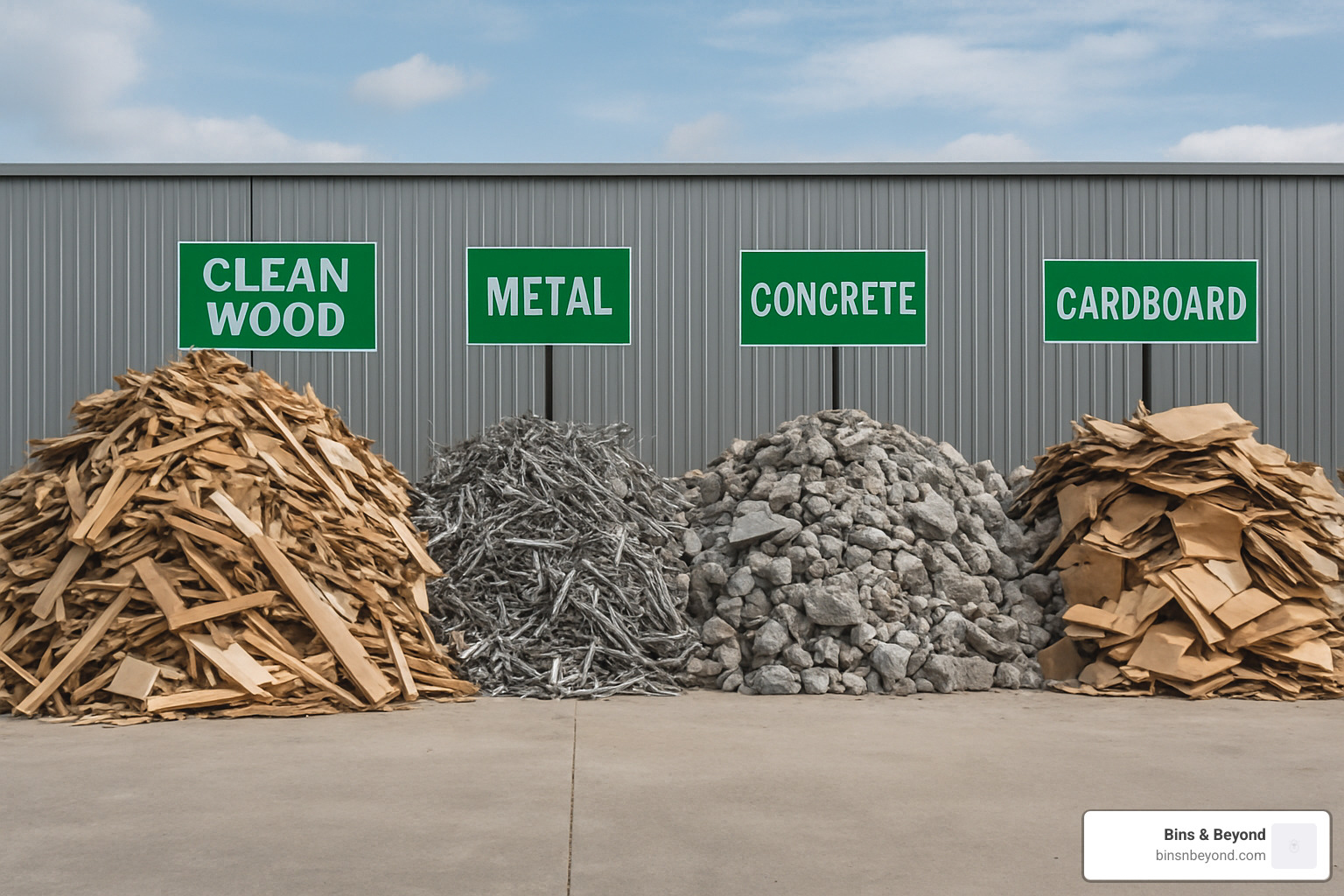
Recycling requirements are becoming increasingly important in construction waste management. We’re proud to partner with facilities that process recyclable construction materials, including clean concrete (recycled into aggregate), untreated wood (processed into mulch or biomass fuel), metal, and cardboard.
By properly sorting materials, we can divert significant waste from landfills—in some cases reducing your project’s environmental impact by up to 90%. This commitment to responsible disposal isn’t just good for the planet; it often results in lower overall disposal costs as recycling facilities typically charge less than landfills for many materials.
For more detailed information about handling construction waste specifically, check out our construction waste removal service page.
Dollars & Details: Costs, Permits & Rental Periods
When it comes to dumpster rental for construction, there’s more to consider than just picking a container size. Let’s walk through everything you need to know about the financial side and logistics.
Across the country, construction dumpster rentals typically cost between $363 and $1,131, though this varies widely based on several factors. Here at Bins & Beyond, we work hard to offer fair, competitive pricing throughout our Pennsylvania service areas including Harrisburg, Hershey, Lebanon, and nearby communities.
We believe in transparency, which is why our quotes are all-inclusive. When we give you a price, it covers the complete package: delivery to your site, a full week of use, pickup when you’re done, and disposal of your waste up to the weight allowance for your chosen container. No hidden surprises waiting for you at the end.
“I was so relieved when I got my final bill and it matched exactly what was quoted,” shares Jennifer, a homeowner from Hummelstown who recently completed a kitchen renovation. “After dealing with so many contractor surprises during my remodel, it was refreshing to work with a company that stuck to their word.”
Several key factors will influence your final cost:
Location matters because delivery distance and local disposal regulations vary across our service area. We proudly serve communities throughout central Pennsylvania including Palmyra, Lebanon, Annville, Hummelstown, Middletown, Hershey, Harrisburg, Grantville, Elizabethtown, Lititz, Jonestown, Fredericksburg, Camp Hill, Mechanicsburg, and Linglestown.
Seasonality plays a role too. Construction activity heats up during spring and summer, which sometimes affects both availability and pricing. Booking your dumpster rental for construction ahead of time is always a smart move, especially during these busy months.
Rental periods with Bins & Beyond typically run for 7 days, which suits most construction timelines perfectly. Need more time? No problem – we offer reasonable daily extension rates when your project needs a little extra breathing room.
Material type is another important consideration. Heavy debris like concrete, brick, and roofing shingles requires special planning due to weight restrictions on roads and at disposal facilities.
Breaking Down the Price of Dumpster Rental for Construction
When you receive a quote from us, it includes several components that make up the total cost:
The base rate covers the fundamentals – delivering the empty container to your site, letting you use it for the rental period, and picking it up when you’re finished.
Landfill tipping fees represent what disposal facilities charge based on the weight of your waste. Heavier loads naturally cost more to process, which explains why we include specific weight allowances with each container size.
A fuel surcharge might be included to account for transportation costs, which can fluctuate along with fuel prices.
Various taxes and regulatory fees may apply depending on local and state requirements for waste services.
At Bins & Beyond, we bundle all these elements into one straightforward rate. Our generous weight allowances include 1 ton for 10-yard dumpsters, 3 tons for 14-yard dumpsters, and 6 tons total for our double 14-yard option.
Do You Need a Permit & How to Get One?
Whether you need a permit depends entirely on where you plan to place your dumpster:
For private property placement – such as your own driveway, yard, or other private property – you typically won’t need a permit from the municipality. However, it’s worth checking if your homeowners association has any specific rules or restrictions.
For public right-of-way placement – like streets, sidewalks, or other public areas – you’ll almost certainly need what’s commonly called an “encroachment permit” or “right-of-way permit.”
Throughout most Pennsylvania municipalities we serve, street placement permits typically cost between $75-$120 and cover a 7-day period. While the exact process varies by location, it generally follows these steps:
- Contact your local public works or streets department
- Submit an application with details about the dumpster size and exact placement location
- Pay the applicable fee
- Once approved, display the permit prominently at the placement site
The actual permit application typically needs to be completed by the property owner or contractor, but our team is always happy to guide you through the process and answer any questions. We’ve helped hundreds of customers steer permit requirements, and we’re just a phone call away if you need assistance.
For specific requirements in your area, your local municipal office is the best source of up-to-date information. Many cities now offer online permit applications that make the process much more convenient than in years past.
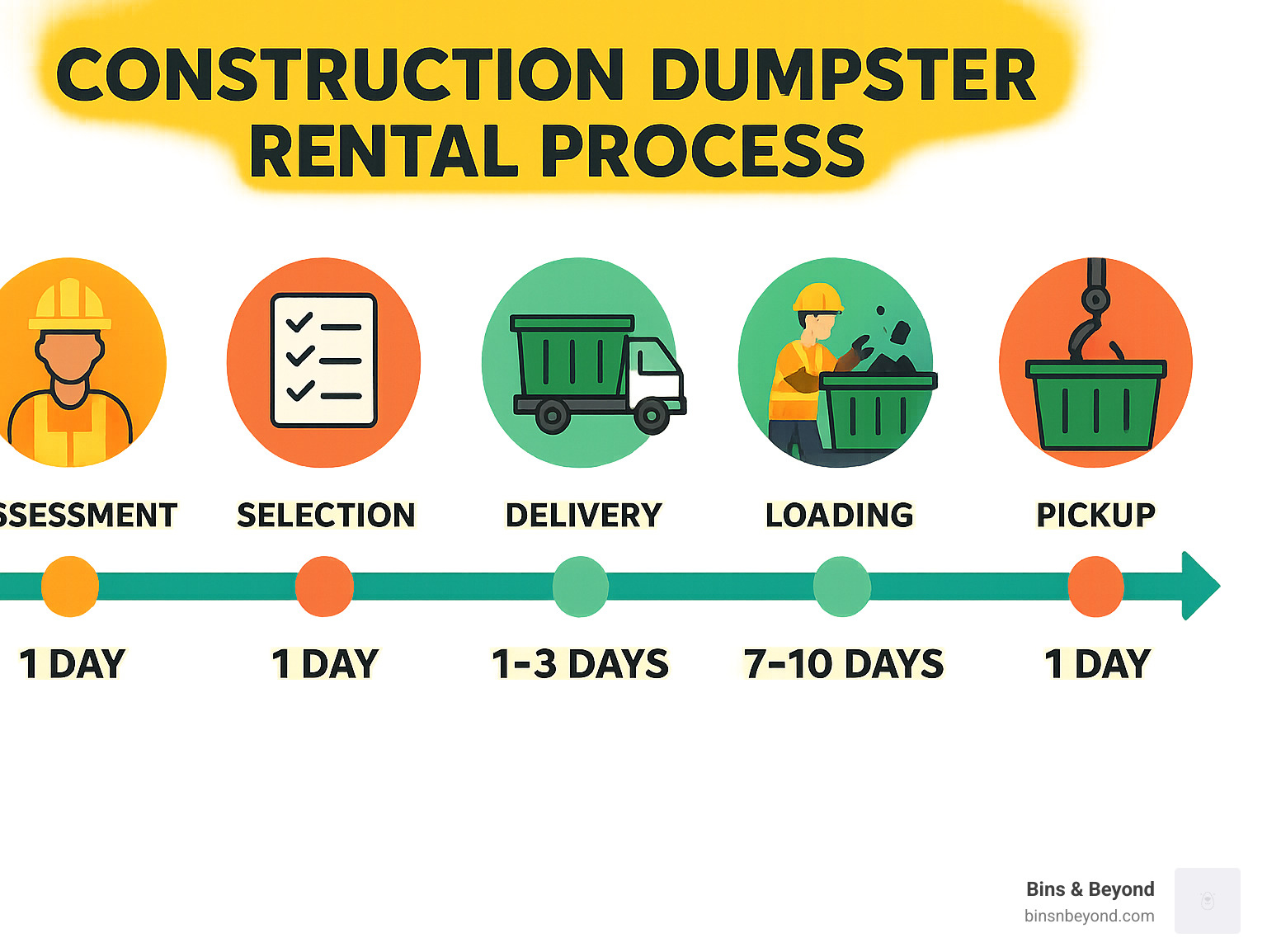
Step-by-Step Rental Process: Delivery, Loading & Swap-Outs
Getting a dumpster for your construction project shouldn’t feel like rocket science. At Bins & Beyond, we’ve streamlined the dumpster rental for construction process to make your life easier while keeping your project moving forward smoothly.
Before your dumpster arrives, a little preparation goes a long way. Take a few minutes to clear the delivery area of any vehicles, equipment, or obstacles that might get in the way. Our delivery trucks need about 25 feet of overhead clearance to operate safely, so check for low-hanging branches or wires. If you have underground sprinklers or utility lines in the area, it’s a good idea to mark them so our driver can avoid them.
“The driver who delivered our dumpster was like a surgeon with that truck,” says Tom from Harrisburg. “He placed it exactly where we needed it without disturbing any of our landscaping. Made the whole process stress-free.”
Protecting your property is a top priority for us—and probably for you too! If you’re having the dumpster placed on your driveway, consider laying down some ¾-inch plywood sheets where the container will sit. For extra protection, 2×4 lumber pieces placed under the dumpster’s contact points can help distribute the weight more evenly. These simple steps can prevent potential scratches or cracks in your concrete or asphalt.
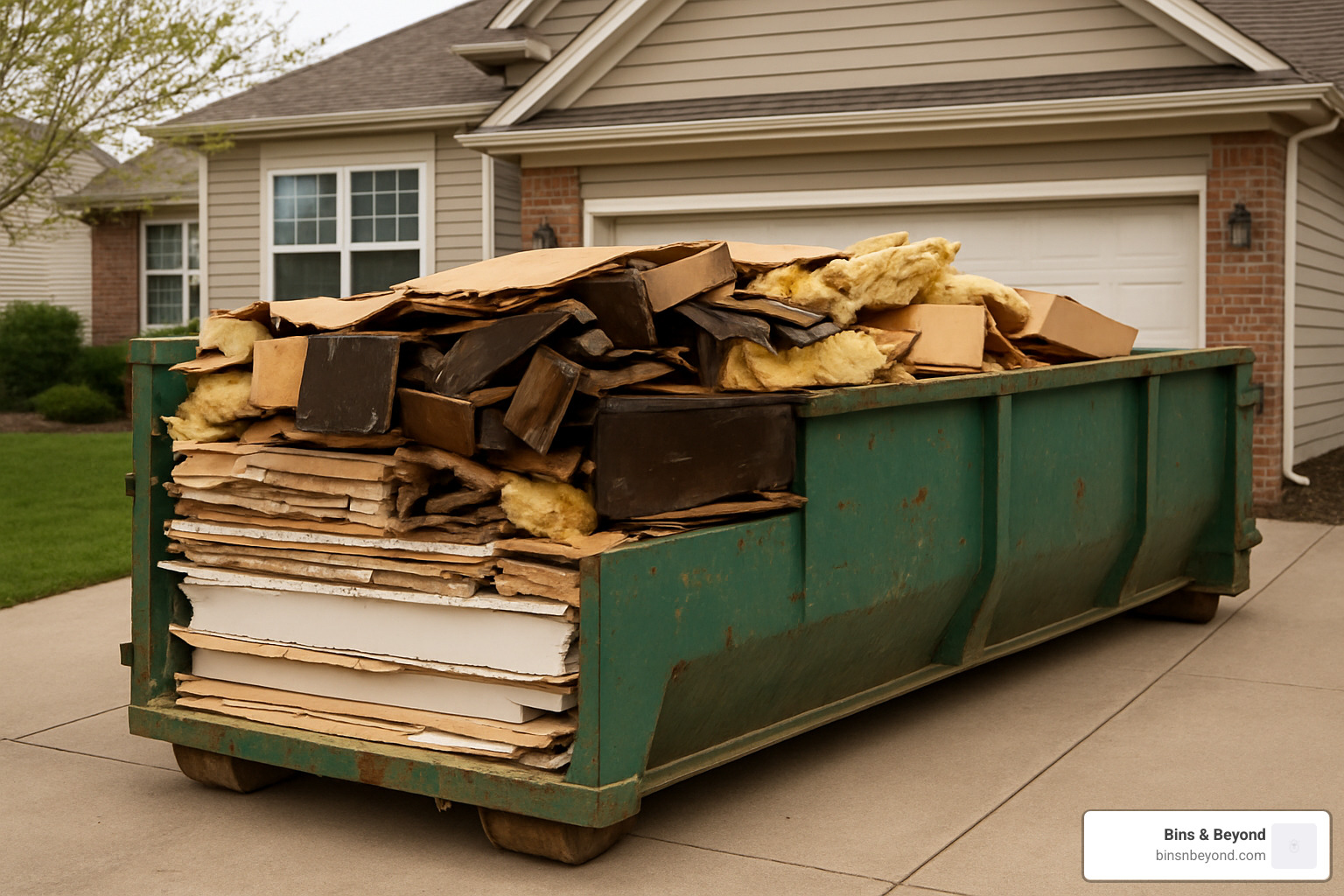
Once your dumpster is in place, how you load it makes a big difference in getting the most value from your rental. Start with flat, bulky items at the bottom to create a solid foundation and maximize your space. Breaking down larger items when possible helps you fit more in, and distributing weight evenly throughout the container prevents shifting during transport. Always keep materials below the fill line (you’ll see it marked inside the container), and try to place lighter materials on top of heavier ones for stability.
For larger renovation or construction projects, you might need more than one dumpster. We offer several approaches to handle bigger jobs:
Sequential rental works well when you have a steady flow of debris but limited space—fill one dumpster, have it removed, then get another delivered.
Simultaneous rental is perfect when you’re generating different types of waste and want to separate them—perhaps one container for recyclable materials and another for general construction waste.
Swap-out service is our most popular option for larger projects. We’ll remove your full container and immediately replace it with an empty one, minimizing any disruption to your workflow.
Scheduling Delivery & Pickup Like a Pro
Timing is everything in construction, and your waste management should sync perfectly with your project timeline. During busy seasons (especially spring through fall), it’s smart to book your dumpster rental for construction at least 5-7 days before you need it. This ensures you’ll get the size you want when you want it.
When placing your order, be specific about exactly where you want the dumpster placed. Our drivers are skilled at precise placement, but clear instructions help ensure everything goes smoothly. Let us know about any potential access challenges like narrow driveways, gates, or low-hanging wires that might affect delivery.
While our standard rental period is 7 days, we understand that construction projects rarely follow a perfect schedule. You can schedule a specific pickup date when ordering, call us when you’re ready for pickup (with at least 24-hour notice), or request an extension if you need more time. We’re flexible because we know your project might be too.
Having a contingency plan is always wise. Consider what you’ll do if your project generates more waste than expected, if weather delays affect your timeline, or if you need to pause work temporarily. Communicating with us early about any changes helps us adjust to your needs quickly.
Staying Within Weight Limits & Avoiding Overage Fees
Managing the weight of your construction debris is crucial for keeping costs under control. Our most successful customers use some smart strategies to avoid unexpected overage fees with their dumpster rental for construction.
Material segregation is perhaps the most effective approach. By sorting heavy items (like concrete, dirt, and brick) from lighter ones (such as wood, drywall, and plastics), you can place heavy materials in dedicated smaller containers. This maximizes your use of weight allowances and often increases recycling opportunities too.
Different construction materials have vastly different weights, and understanding these differences helps with planning. Concrete and brick weigh about 4,000 pounds per cubic yard, while asphalt shingles come in around 2,200 pounds per cubic yard. Mixed construction debris typically weighs between 500-700 pounds per cubic yard, and clean wood waste is even lighter at 300-400 pounds per cubic yard.
For projects involving heavy materials, consider using multiple smaller containers rather than one large one. This approach often proves more economical than risking overweight charges. On longer projects, periodically check the approximate weight of your container based on the volume and type of material you’ve loaded.
“I was shocked when I learned how quickly concrete can exceed weight limits,” shares Jennifer, a homeowner from Camp Hill who completed a whole-house renovation. “Having a swap-out arrangement with Bins & Beyond saved us days on our timeline. We never had to stop work waiting for a place to put debris, and their team was always prompt with the exchanges.”
Most importantly, keep the communication lines open. If you realize you’ll exceed the weight allowance, contact us proactively. We can advise on the most cost-effective solution, whether that’s an early swap-out or adjusting your disposal strategy. At Bins & Beyond, we’re committed to finding solutions that work for your specific project needs and budget.
For more information about placing dumpsters in residential areas, check out our driveway dumpster rental page.
Green Disposal & Common Pitfalls to Avoid
When it comes to construction waste, what happens after the dumpster leaves your site matters just as much as how you fill it. At Bins & Beyond, we take environmental responsibility seriously – and for good reason. Did you know construction and demolition waste makes up nearly a third of all waste generated in the United States? That’s a massive opportunity to make better choices for our planet.
“I was surprised to learn how much of my renovation debris could actually be recycled,” shares Tom from Lebanon, one of our regular customers. “It feels good knowing my old kitchen cabinets aren’t just sitting in a landfill somewhere.”
We’ve built partnerships with facilities that prioritize waste diversion and recycling specifically for construction materials. Your dumpster rental for construction isn’t just disappearing into a landfill – many materials are getting a second life:
Wood from your demolition can become mulch for local gardens or biomass fuel. Metal scraps are melted down for new products (and almost infinitely recyclable). That pile of concrete and masonry will likely be crushed into aggregate for new construction projects. Even the cardboard from all your material packaging and clean drywall scraps can be processed into new manufacturing.
When you choose Bins & Beyond, we ensure materials go to the appropriate facilities for maximum recycling potential. This approach not only reduces environmental impact but can also help if your project is seeking LEED certification or needs to meet other green building standards.
Prohibited Materials
While construction dumpsters can handle most project debris, certain items are absolute no-gos due to environmental regulations. These prohibited materials include:
Hazardous waste like paint, solvents, oils, chemicals, and pesticides need specialized disposal. Electronics (computers, TVs, etc.) and appliances (especially those with refrigerants like refrigerators and air conditioners) require specific recycling processes. Tires, batteries (both automotive and household), and fluorescent bulbs (which contain mercury) all demand special handling.
Tossing these items into your construction dumpster isn’t just against our policies – it can result in significant fines and environmental harm. If you’re unsure about proper disposal for these materials, just ask! We’re happy to point you toward appropriate disposal options in your area.
Top Mistakes to Avoid
After helping hundreds of construction projects throughout Pennsylvania with their waste management, we’ve seen the same pitfalls trip up even experienced contractors. Here’s how to avoid the most common mistakes:
Underestimating debris volume happens to almost everyone, especially first-time renovators. That kitchen remodel? It’ll generate about twice the waste you’re imagining. Our advice: estimate your needs, then go one size larger. You’ll rarely regret having extra space.
Ignoring weight limits can lead to surprise fees. Weight – not volume – is often the limiting factor for construction dumpsters. This is particularly true with concrete, brick, and roofing shingles. A small pile of concrete can quickly exceed weight allowances.
Improper loading creates headaches for everyone. Loading beyond the fill line or distributing weight unevenly can create safety hazards and may result in additional fees or even refusal to transport. Take a few extra minutes to load thoughtfully.
Mixing prohibited items with regular construction debris happens more often than you’d think. That half-empty paint can might seem small, but it can contaminate an entire load and create environmental concerns.
Poor placement planning can derail your project efficiency. Consider access for both our delivery truck and your construction team before we arrive. The perfect spot balances convenience with practical access.
Neglecting permit requirements for street placement is an expensive mistake. Local authorities don’t hesitate to issue fines for unpermitted dumpsters on public property. We’re happy to guide you through the permitting process, but don’t skip this crucial step.
Last-minute scheduling during busy seasons (especially spring through fall) may leave you without waste management when you need it most. Book your dumpster rental for construction at least 5-7 days before your project start date for the best experience.
By avoiding these common mistakes, your construction project will run more smoothly, your environmental impact will be minimized, and you’ll likely save money in the process. At Bins & Beyond, we’re not just providing a container – we’re partnering with you for responsible waste management from start to finish.
Frequently Asked Questions About Dumpster Rentals
How long can I keep a construction dumpster on my site?
Our standard rental period gives you a full 7 days with your dumpster, which works perfectly for most construction projects. But let’s be honest—when has a construction project ever gone exactly according to plan? Weather delays happen, materials arrive late, or you suddenly find that wall definitely wasn’t supposed to come down.
That’s why we’ve made extensions simple. Just give us a call when you realize you need more time, and we’ll extend your rental for a reasonable daily rate. No stress, no rushing to finish.
“I thought my bathroom remodel would be a quick weekend project,” laughs Mark from Harrisburg. “Seven days turned into twelve, but Bins & Beyond made extending my rental completely painless. One phone call and I was set.”
For longer projects, many of our customers in Harrisburg, Hershey, and surrounding areas opt for our scheduled swap-out service. We’ll replace your full container with an empty one on a regular schedule, ensuring you never run out of disposal space throughout your project.
What materials can’t go into the container?
While our dumpster rental for construction handles most building debris with ease, environmental regulations and disposal facility rules prohibit certain items. Think of these as the “forbidden materials” that need special handling:
Hazardous materials like liquid paint, solvents, oils, fuels, and chemicals can’t go in—these require specialized disposal to prevent environmental contamination. Similarly, regulated items such as asbestos, lead paint chips, and certain treated woods need special handling procedures.
Electronics (computers, TVs, monitors) and appliances containing refrigerants (air conditioners, refrigerators) are also no-gos, along with tires, batteries, and any type of liquid waste.
Not sure about a specific item? Just give us a call before tossing it in. We’re happy to point you toward the right local resources for properly disposing of these materials. Sometimes, what seems like a hassle can actually be an opportunity—many of these items can be recycled or donated instead of landfilled.
What happens if I exceed the weight limit?
Weight limits aren’t just arbitrary numbers—they’re based on road safety regulations and disposal facility requirements. Each of our dumpster sizes includes a generous weight allowance (1 ton for 10-yard, 3 tons for 14-yard, and 6 tons for double 14-yard). If you go over these limits, additional charges apply at $100 per ton.
Here’s how to stay within your weight allowance and avoid those extra charges:
Know your materials. That pile of concrete that looks small? It weighs a ton—literally! Concrete, brick, dirt, and roofing shingles are deceptively heavy. A partially-filled dumpster with these materials can easily exceed weight limits.
Consider dedicated containers for heavy stuff. Sometimes renting a smaller dumpster specifically for concrete or brick makes more financial sense than mixing everything together.
Distribute weight evenly as you load, and try to mix heavier and lighter materials when possible.
Most importantly, talk to us if you think you might go over. We’d rather work with you proactively to find a solution—maybe an early swap-out or a different container size—than surprise you with overage fees later.
Conclusion
There’s a lot more to dumpster rental for construction than just dropping off a metal box at your jobsite. As we’ve explored throughout this guide, thoughtful waste management can make the difference between a smooth project and a logistical nightmare.
The right construction dumpster does more than just collect debris—it becomes a central part of your project’s efficiency, safety plan, and environmental responsibility. At Bins & Beyond, we’ve helped countless contractors and homeowners across Pennsylvania turn their waste challenges into seamless solutions.
Think about what we’ve covered together: choosing between our 10-yard containers for smaller renovations, 14-yard dumpsters for most remodels, or double 14-yard options for major projects. We’ve walked through weight considerations (remember that concrete is deceptively heavy!), permit requirements for street placement, and loading strategies that maximize your rental value.
“The dumpster was probably the last thing on my mind when planning my kitchen remodel,” shares Sarah from Harrisburg. “But honestly, having it delivered exactly when promised and picked up promptly made everything else run smoother. I didn’t realize how much stress it would save.”
Your construction project represents a significant investment of time, money, and energy. The waste solution you choose should support that investment, not complicate it. That’s why we’ve built our business around reliability, transparency, and environmental stewardship—delivering not just dumpsters, but peace of mind.
When you choose Bins & Beyond for your dumpster rental for construction, you’re partnering with a team that understands the unique challenges of building projects. We’ve designed our services specifically for the needs of our Pennsylvania communities in Harrisburg, Hershey, Lebanon, Camp Hill, and surrounding areas. We’re not just another waste company—we’re your neighbors committed to keeping our shared environment clean while helping your project succeed.
The journey from demolition to completion generates substantial waste. Rather than letting that waste become a burden, let it become an opportunity to demonstrate your commitment to responsible building practices. With proper sorting and our partnerships with recycling facilities, much of your project’s debris can be diverted from landfills and given new life.
Ready to secure the perfect waste solution for your next construction project? Contact us today and experience the difference that comes from working with a company that truly cares about your project’s success as much as you do.